

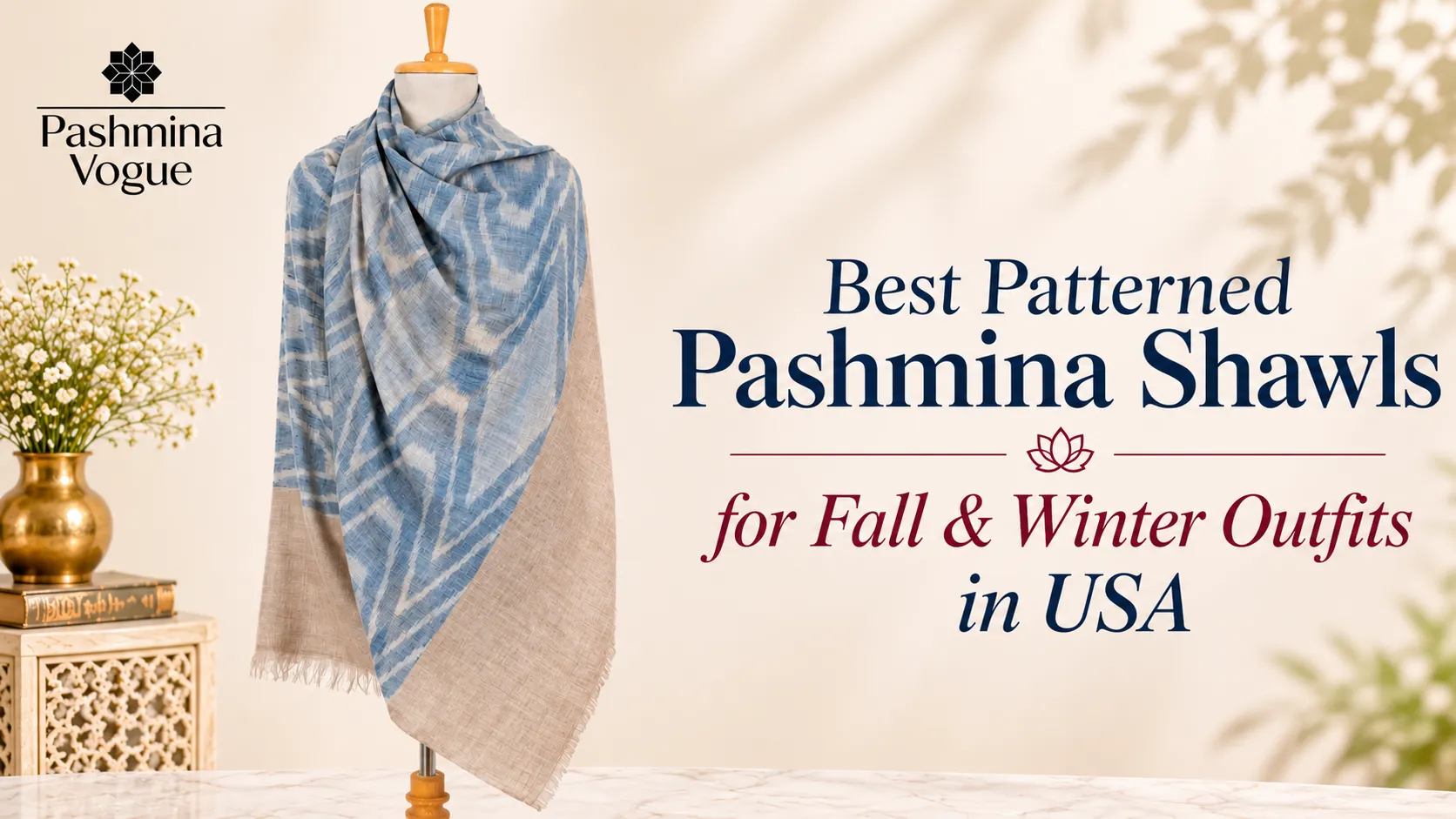
Best Patterned Pashmina Shawls for Fall & Winter Outfits in USA

Introduction
When the first cold wind rolls across the American Northeast or a chilly evening settles over the Pacific Northwest, most of us reach for the same heavy coat we wore last year. But there is a quieter, more graceful way to stay warm. Patterned pashmina shawls turn a basic outfit into something worth a second look, and they do it without the bulk of a thick sweater.
Whether you are dressing for a crisp October morning in Chicago or a snowy December dinner in Denver, the right pattern can change the whole mood of your look. In this guide, we cover how to choose the best patterned pashmina shawls, which designs suit each season, and how to wear them with confidence. Brands like Pashmina Vogue have made it easier for shoppers across the USA to find authentic, beautifully woven pieces, so knowing what to look for matters more than ever.
Why Patterned Pashmina Shawls Are a Cold-Weather Essential
Warmth Without the Bulk
Pashmina comes from the fine undercoat of Himalayan mountain goats, and that fiber traps body heat remarkably well. A well-made shawl can feel almost weightless on your shoulders while still holding off a bitter breeze. That is why a cashmere pashmina shawl often outperforms chunky knits that look warm but feel heavy by midday.
One Piece, Endless Outfits
A solid-color wrap is useful, but a patterned one does more work. It adds texture, color, and personality to plain basics like a black turtleneck, denim, or a simple wool dress. Instead of buying a new top every time you want a fresh look, you can swap the shawl and get a completely different result.
What to Check Before You Buy a Pashmina Shawl
Not every soft wrap sold online is real pashmina. Plenty of cheaper scarves are made of viscose or acrylic and simply carry the name. A few quick checks can save you money and disappointment.
Fiber and Weave
Look for a label that clearly states the fiber content. Genuine pieces are usually handwoven on traditional looms, which gives the fabric a slightly uneven, organic feel. Blends of pashmina and silk are common and perfectly good, offering a subtle sheen and extra durability. If the price seems too good to be true, it probably is.
Size and Weight
For fall and winter, a generous size works best. Aim for roughly 28 by 80 inches, which gives you enough length to wrap twice around the neck or drape across the shoulders like a light cape. Heavier weaves suit January temperatures, while lighter ones layer well in September and early October.
The Best Patterns for Fall and Winter
Pattern choice sets the tone. Here are the designs that consistently earn their place in a cold-weather wardrobe.
Paisley
The paisley pashmina shawl is a timeless favorite for good reason. Its curved teardrop motifs feel rich and a little romantic, and they pair beautifully with deep autumn shades like burgundy, forest green, and mustard. Paisley works especially well over solid-colored coats, where it becomes the focal point of the outfit.
Plaid and Checks
Nothing says autumn quite like a classic check. A plaid pashmina brings a cozy, collegiate feel that suits weekend errands, campus walks, and casual Friday office days. Choose muted tones such as camel, charcoal, and cream for a polished look, or go with red and navy for something more festive during the holidays.
Floral Jacquard
Woven florals add softness to heavier winter fabrics. A jacquard shawl with tonal flowers looks understated from a distance and surprisingly detailed up close. It is a smart pick if you want pattern without loud color, and it pairs easily with both wool coats and puffer jackets.
Geometric and Houndstooth
For a sharper, more modern feel, geometric prints and houndstooth deliver. They fit well with tailored blazers, structured trousers, and city style. If your wardrobe leans minimal, a bold geometric wrap is an easy way to add interest without clutter.
Embroidered Borders
Hand-embroidered borders, often called sozni work in Kashmiri tradition, turn a shawl into a keepsake. The needlework takes days or even weeks to complete, and it shows. These pieces suit formal winter events, holiday parties, and evenings out, when you want something that feels special.
How to Style a Pashmina Shawl for Fall
Fall is all about layering, and shawls shine in this season because the temperature swings so much between morning and afternoon.
Over a blazer or denim jacket. Drape the shawl loosely around your neck and let both ends hang in front. This is the easiest approach, and it looks relaxed rather than fussy.
With a trench coat. Tuck a lightweight patterned wrap inside the collar. The contrast between crisp outerwear and soft fabric looks effortless.
Belted as a vest-like layer. Fold the shawl across your back, cross the ends in front, and secure them with a slim belt. It gives a tailored shape to a simple dress.
As a wrap on warm afternoons. Sling it over one shoulder when the sun comes out. You stay prepared without overheating.
How to Style Pashmina Shawl Outfits for Winter
Winter calls for more coverage, but you do not have to give up style to stay warm.
The Double Wrap
Fold the shawl in half lengthwise, loop it around your neck twice, and tuck the ends under your coat. This creates a snug collar that blocks wind and looks neat under any outerwear.
The Shoulder Cape
For evening events, drape the shawl across both shoulders and let it fall to your elbows. Pair it with a long-sleeved dress or a velvet top. It keeps you warm between the car and the venue and looks elegant indoors too.
Under a Heavy Coat
Many people forget that a shawl can sit beneath a coat instead of on top of it. A thin patterned wrap tucked under the lapels adds a warm inner layer and a hint of color where your coat opens.
Worn as a Head Covering
On windy days, bring one corner over your head and secure it loosely under the chin. It protects your ears and looks surprisingly chic.
Color Pairing Tips for Cold Months
Choosing a color combination does not need to be complicated. A few simple rules help.
- Neutral outfit, bold shawl: Wear black, grey, or camel and let a jewel-toned paisley carry the look.
- Colorful outfit, subtle shawl: If your sweater or dress already has strong color, pick a tonal jacquard or soft check.
- Earth tones for fall: Rust, olive, and ochre feel natural in September through November.
- Cool tones for winter: Deep blue, emerald, plum, and silver-grey suit the darker months.
When you shop with a specialist seller such as Pashmina Vogue, it helps to view the shawl in natural light if photos allow, since pattern colors can look different on screen than in person.
Caring for Your Patterned Pashmina
A quality shawl can last for many years if you treat it gently.
Wash rarely. Pashmina does not need frequent cleaning. Airing it out after wear is often enough. When it does need washing, use cool water and a mild wool detergent, or send it to a professional dry cleaner.
Never wring or twist. Press the water out gently with a towel and dry the shawl flat, away from direct heat or sunlight.
Store it folded, not hung. Hanging can stretch the fibers over time. Keep your shawl in a breathable cotton bag with a cedar block to deter moths.
Handle pilling carefully. Small bobbles are normal with natural fibers. Remove them by hand or with a soft fabric comb rather than a razor.
Buying Tips for Shoppers in the USA
American buyers have plenty of choices, from department stores to online boutiques, so a bit of caution goes a long way. Check return policies, read customer reviews that mention softness and color accuracy, and look for sellers who explain where and how their shawls are made. Transparency about origin and weaving methods is usually a good sign. Retailers like Pashmina Vogue that focus specifically on this category tend to offer a wider range of patterns and clearer fiber information than general fashion stores.
Also consider your climate. If you live in the Southeast, a lighter pashmina-silk blend suits mild winters. If you are in Minnesota or Maine, a denser weave will serve you far better.
Final Thoughts
Patterned pashmina shawls are one of the few accessories that are practical, beautiful, and flexible all at once. A paisley wrap can brighten a gray November commute, a plaid one can make a simple sweater feel intentional, and an embroidered piece can carry you through the holidays in style. Focus on genuine fiber, a size that suits your needs, and a pattern that matches how you actually dress.
If you are ready to build a cold-weather wardrobe that feels both warm and refined, exploring the collections at Pashmina Vogue is a good place to start. Pick one pattern you love, learn two or three ways to wear it, and you will find yourself reaching for it all season long.
Frequently Asked Questions
Can I wear a patterned pashmina shawl to work?
Yes. Choose subtle patterns like small checks, tonal florals, or understated paisley, and keep the colors close to the rest of your outfit.
Is pashmina warm enough for deep winter?
On its own, it works well for cool to cold weather. In freezing temperatures, wear it as an extra layer under or over a coat.
How do I know a shawl is real pashmina?
Check the label, feel for natural unevenness in the weave, and buy from sellers who are open about their sourcing.
