Handspun Pashmina
Purchase genuine GI-certified pashmina shawls crafted for luxury lovers. Find certified pashmina with a rich feel, classic elegance, and lasting beauty.

- Sale! 10% New!

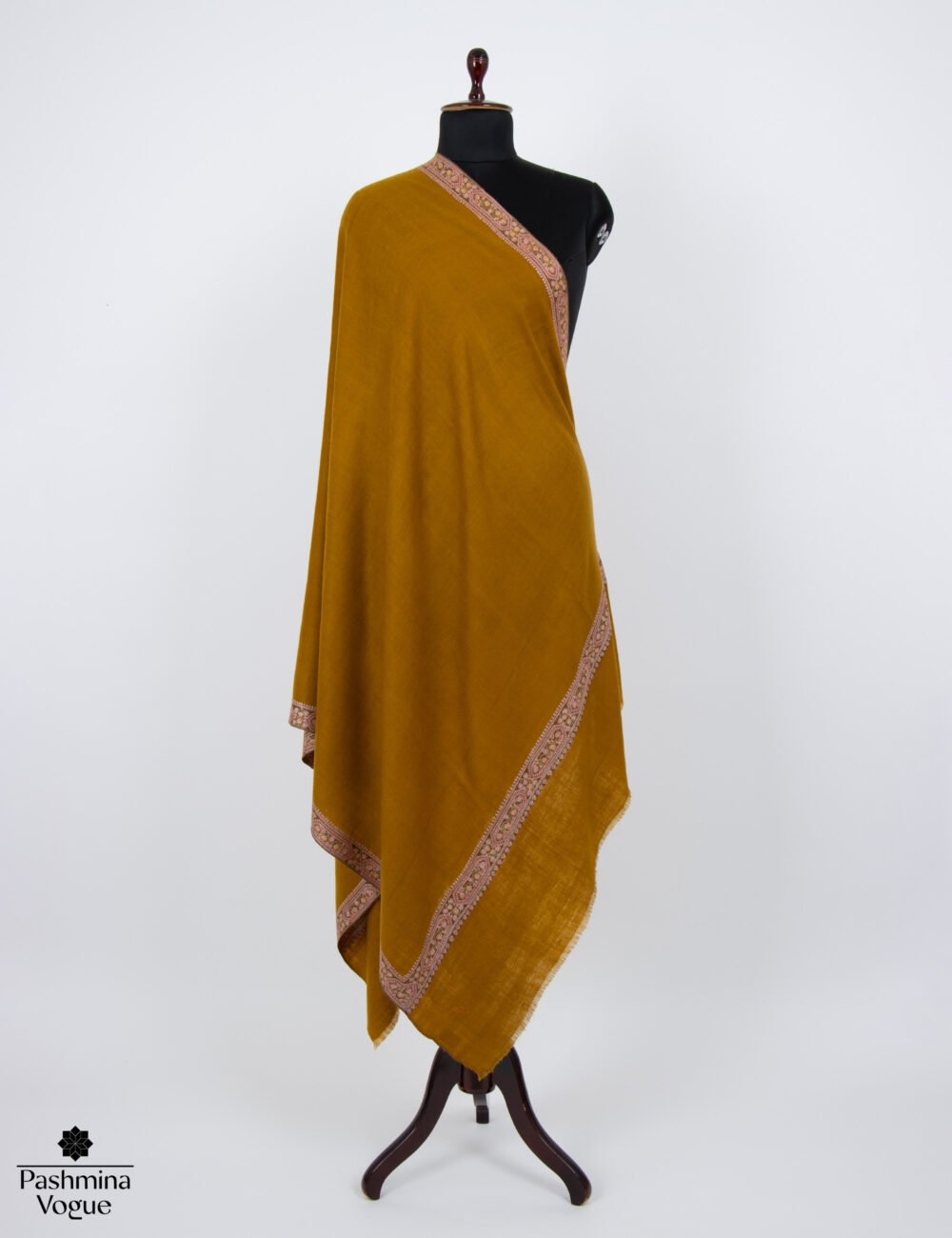
Mustard GI Palla Pashmina Shawl
- Sale! 2% New!
GI Pashmina Embroidered Shawl
- Sale! 5%
Shadow Grace GI Pashmina Shawl | Authentic Kashmir Pashmina
- Sale! 5%
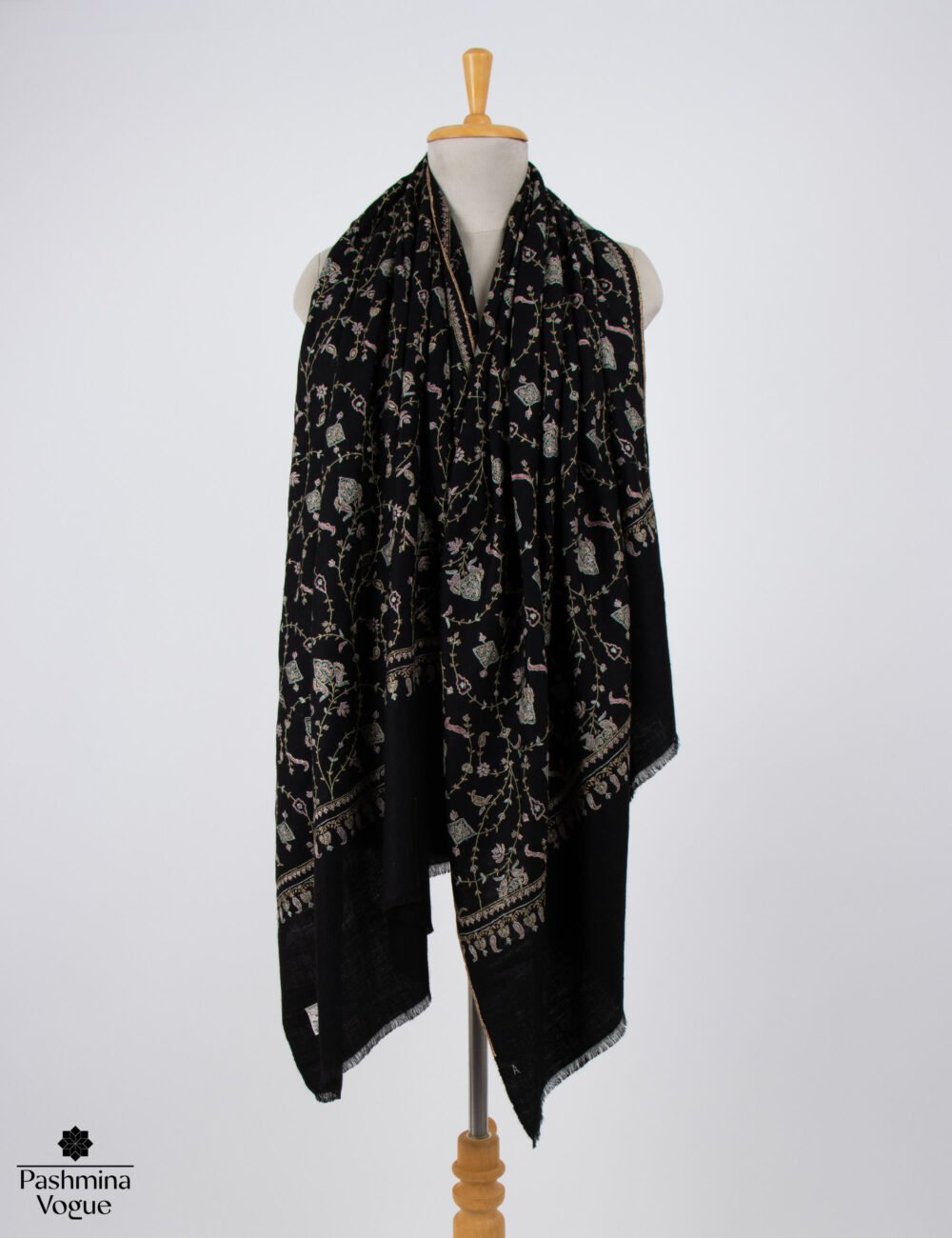
Black GI Embroidered Pashmina Shawl Handmade Kashmiri Wrap
- Sale! 22%
Gi White Natural Shawl and Stole
Price range: $ 204 through $ 335 Select options This product has multiple variants. The options may be chosen on the product page - Sale! 30%
Gi Zati Plain Pashmina Shawl and Stole
Price range: $ 204 through $ 547 Select options This product has multiple variants. The options may be chosen on the product page - Sale! 12%

Tobacco Brown Cashmere Pashmina Wrap
- Sale! 14%
Checked GI Patterned Cashmere Shawl
- Sale! 12%
Tobacco Brown GI Pashmina Wrap
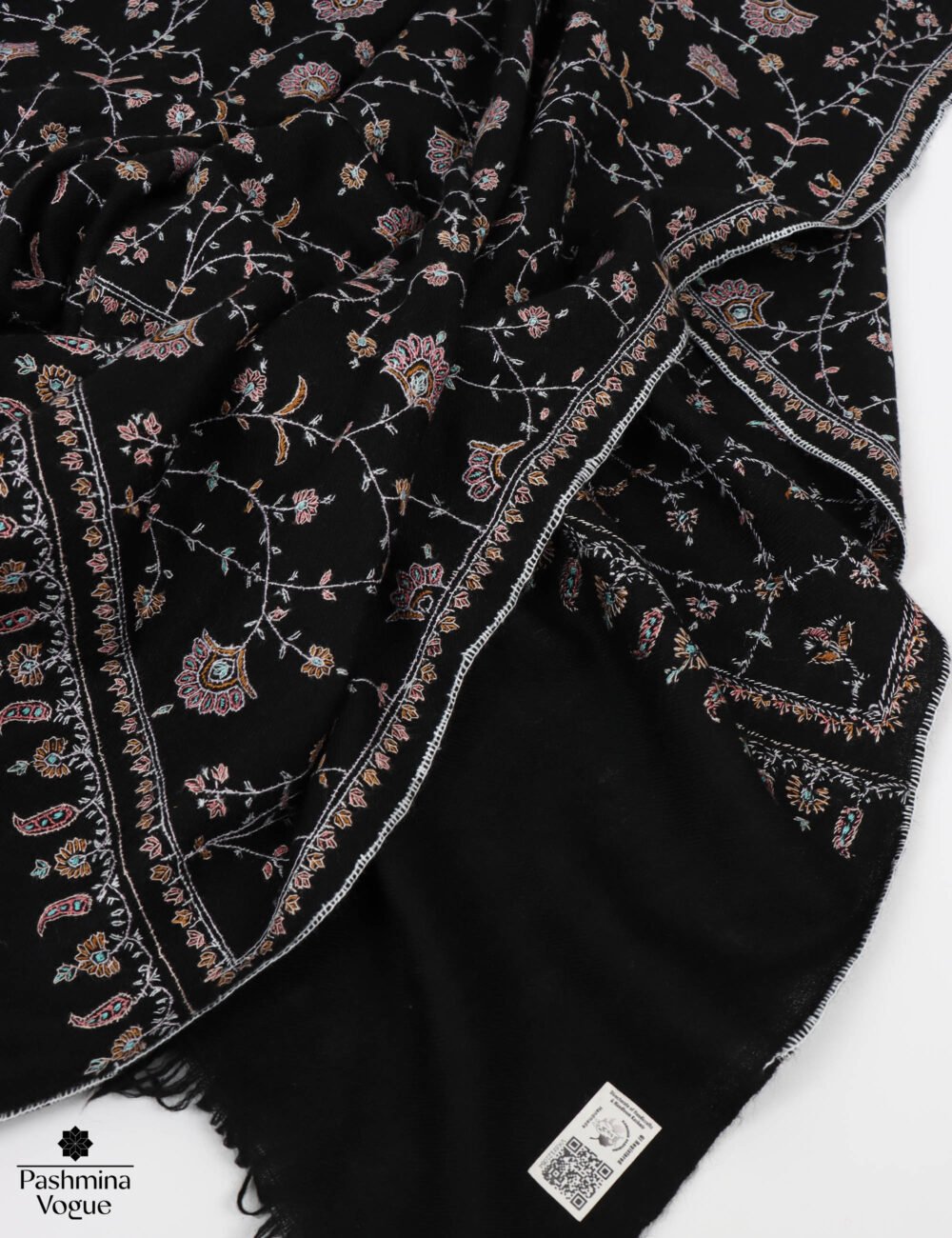
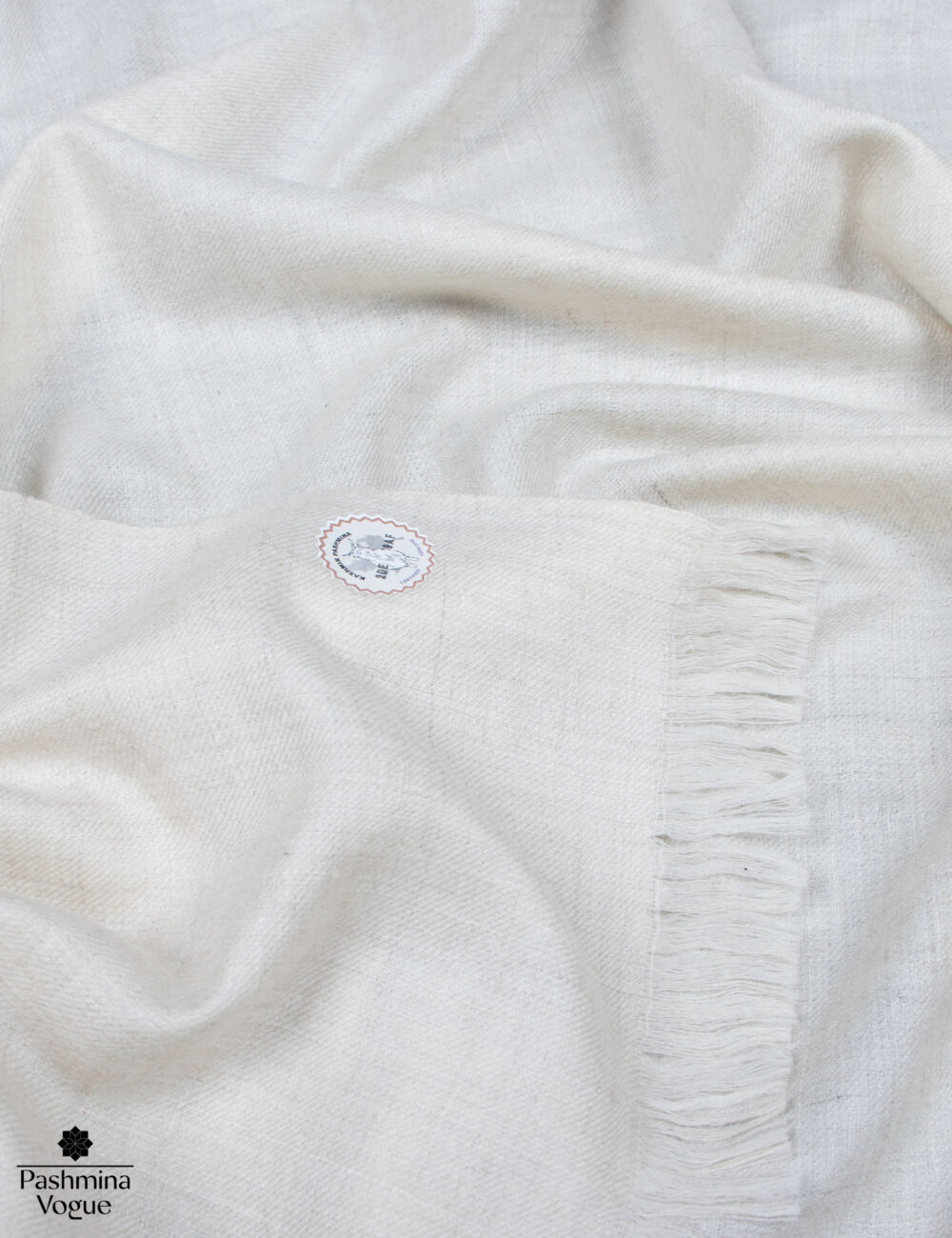
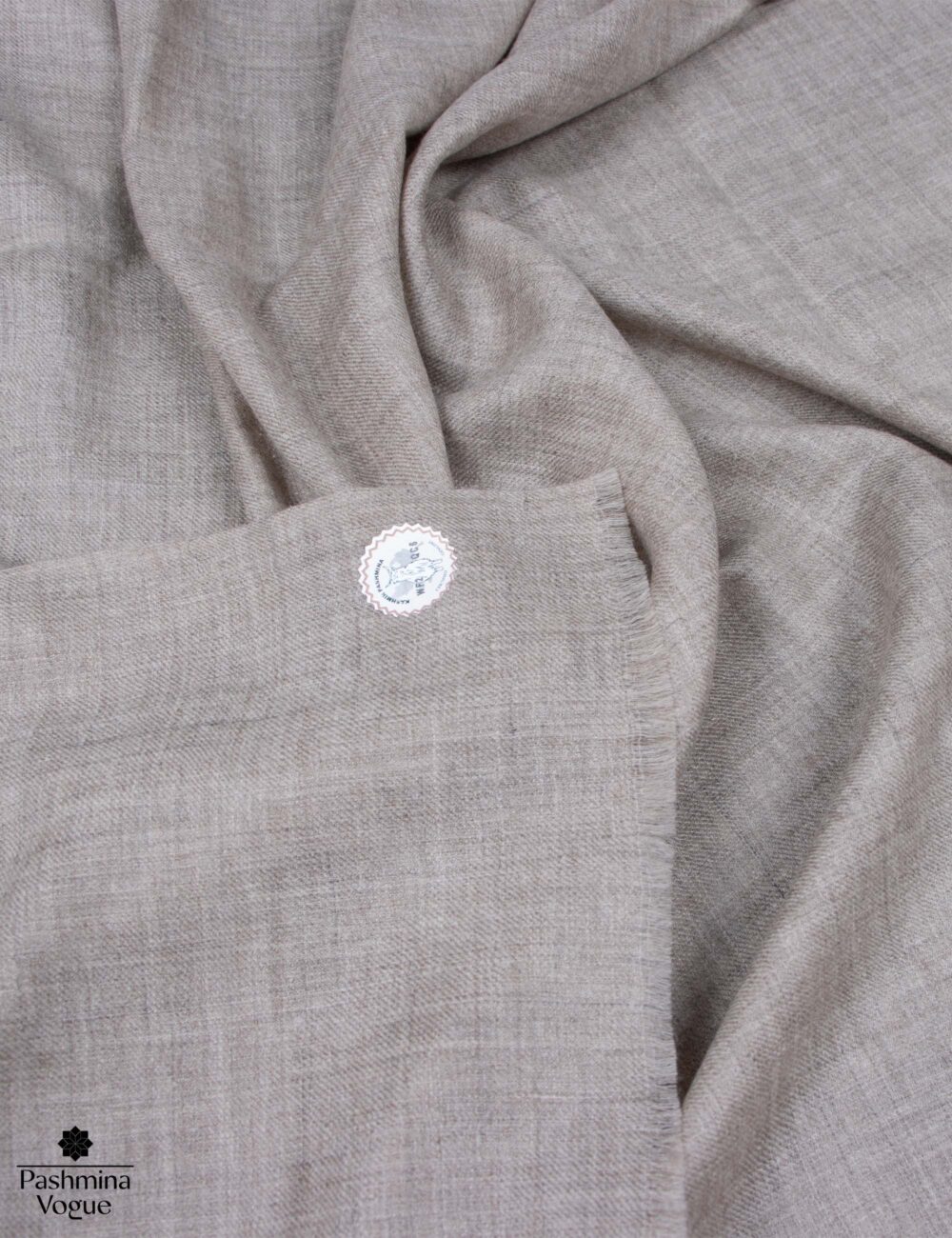
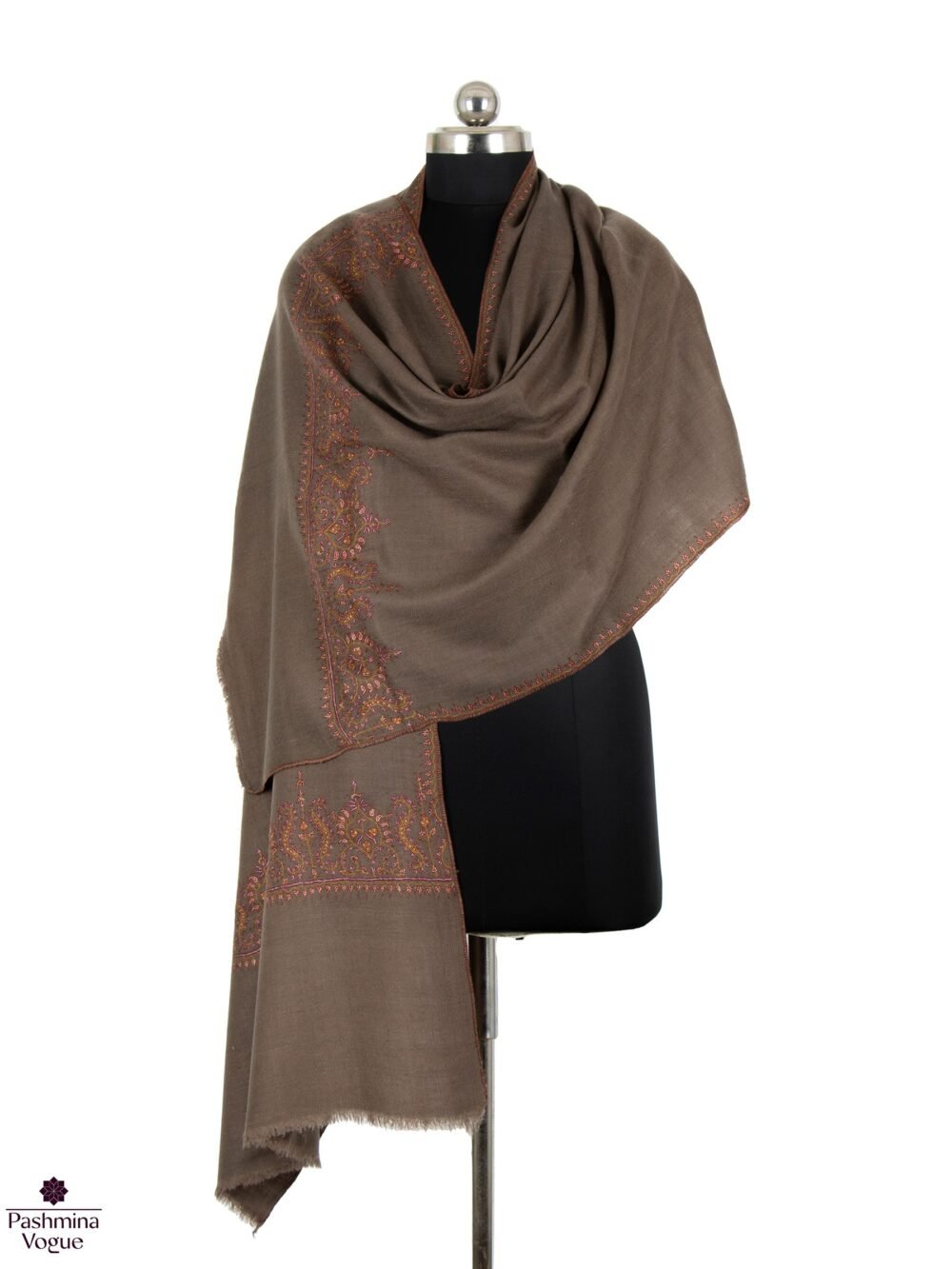
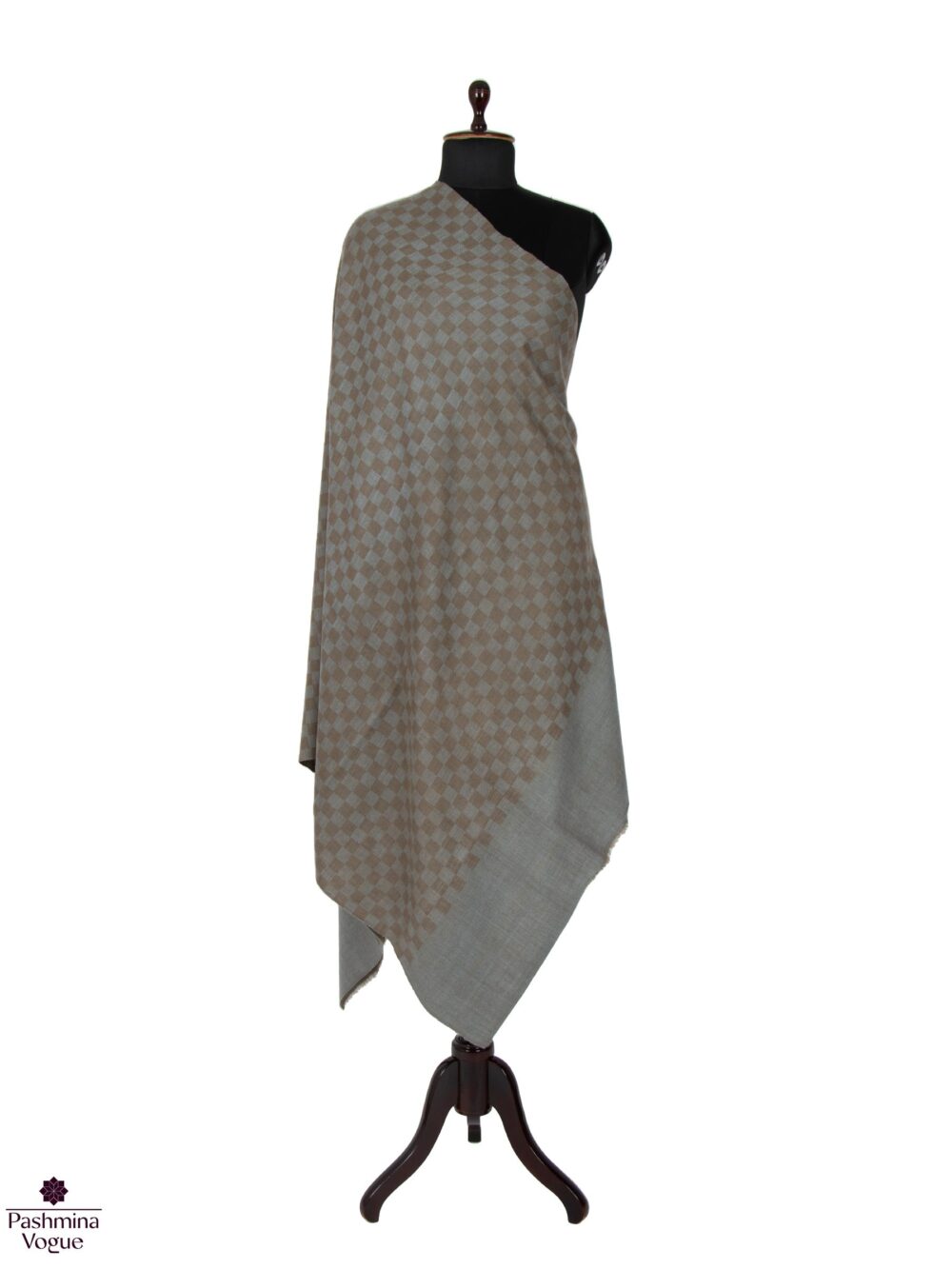
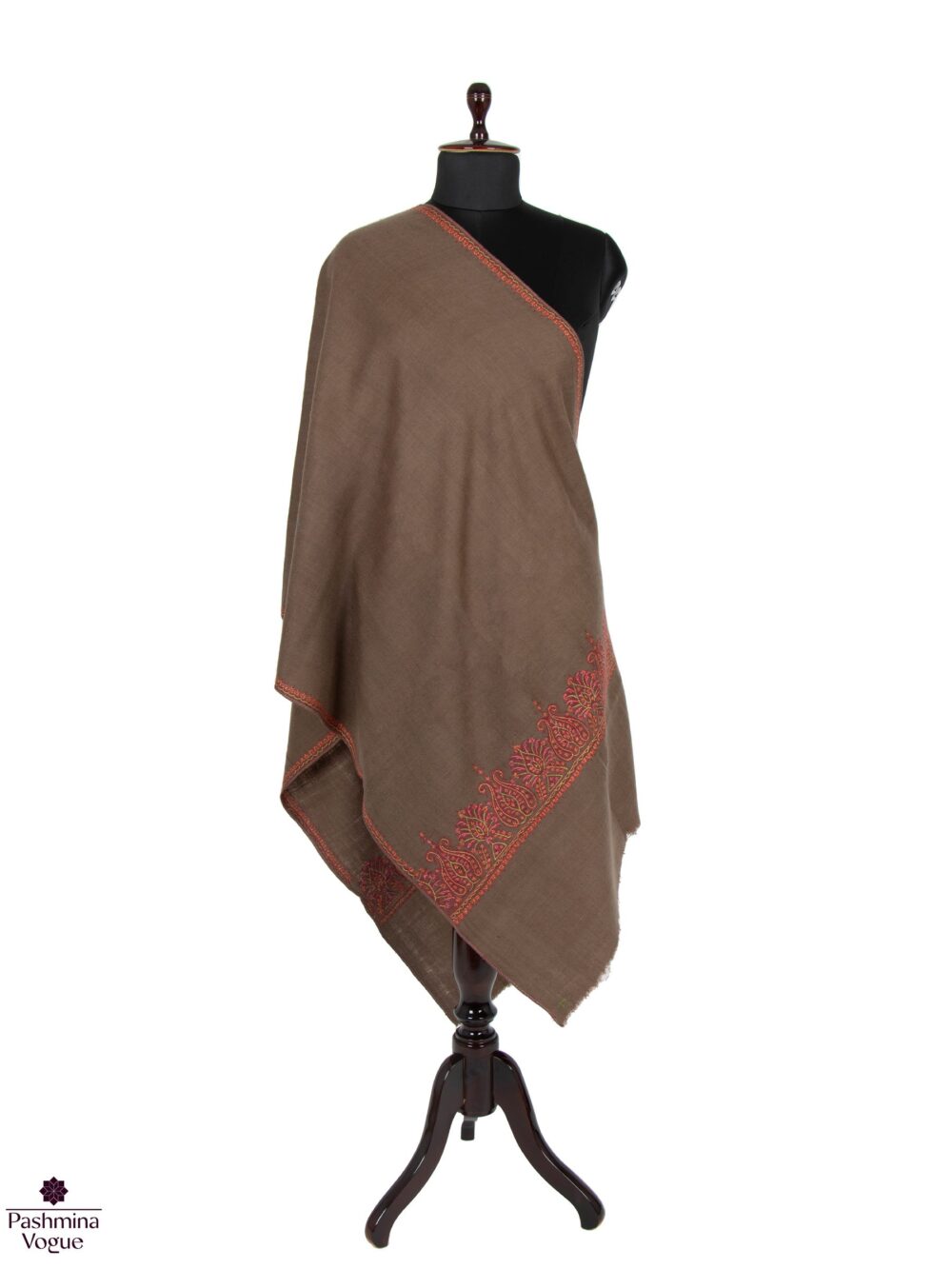
GI-Certified Pashmina- A True Mark Of Kashmiri Heritage
GI-Certified Pashmina is a true Kashmiri craft, which is protected with an official Geographical Indication tag. This certification signifies that the Pashmina shawls are genuinely made in Kashmir, by using traditional techniques and authentic pashmina fibers. At Pashmina Vogue, you will get GI-Certified shawls that carry the beauty of true handwork and are shaped by generations of skilled artisans.
So, when choosing a GI-certified Pashmina shawl, you can trust Pashmina Vogue. Also, it signifies that you are not just purchasing a shawl, but you are bringing home a part of Kashmir’s heritage, which is known for its purity, warmth and beauty.
What GI Certification Means for Kashmiri Pashmina Authenticity
Kashmir, which is known as Paradise on Earth, is exemplified by the Pashmina. The luxury fabric Pashmina is deeply connected to Kashmir’s culture, tradition and skilled craftsmanship. So, to protect this unique heritage, Kashmiri Pashmina shawls have been given a GI label, which truly confirms that Pashmina fibers belong to Kashmir only.
Under India’s Geographical Indications of Goods Act, Kashmir Pashmina was officially registered with GI No. 46 & Certificate No. 97 in classes 23, 24 & 25 on December 9, 2005. This registration not only ensures that the business follows proper rules that are related to raw materials, production methods and final quality, but can legally use the name “ Kashmir Pashmina”. The GI registration is managed under TAHAFUZ, which is registered under the J&K Societies Act.
The main purpose of GI tagging is to ensure that buyers know that Pashmina products are completely pure and authentic and are free from any unauthorized fibers. It will also help in making the export and the movement of genuine Pashmina products easier. In other words, the GI tag makes it easier for buyers to trust that they are only purchasing original GI-Cerified Kashmiri Pashmina.
The Uniqueness of GI-Certified Pashmina at Pashmina Vogue
Material: Raw Pashmina is usually obtained from Changthangi goats, which are rare in themselves and the process of its origin is also unique and natural. Himalayan Changthangi goats develop fine cashmere fibers during the winter season and naturally shed them in both spring and summer. Afterwards, the fiber is then collected and handed over to the women of Kashmir, who clean, comb, and hand spin it, and then the male artisans take over the process of transforming the thread into luxurious Pashmina products.
Craftsmanship: Talented and skilled Kashmiri artisans are mainly involved in the entire hand-woven process of Pashmina. They usually follow the traditional technique for creating masterpieces of hand-made Pashmina shawls, scarves, etc.
Cultural Significance: Pashmina is not just the heritage of Kashmir but also the national heritage of India. It represents the roots of Kashmir, its tradition and the hard work of Kashmiri artisans. It is also considered the best gift option for everyone, and allows them to feel royal in their look.
Frequently Asked Questions
1: What does the GI tag mean for Kashmiri Pashmina?
The GI tag is an official identity that confirms that the pashmina is genuinely linked to Kashmir and it follows traditional production standards.
2: How do I check whether my Pashmina is GI-certified?
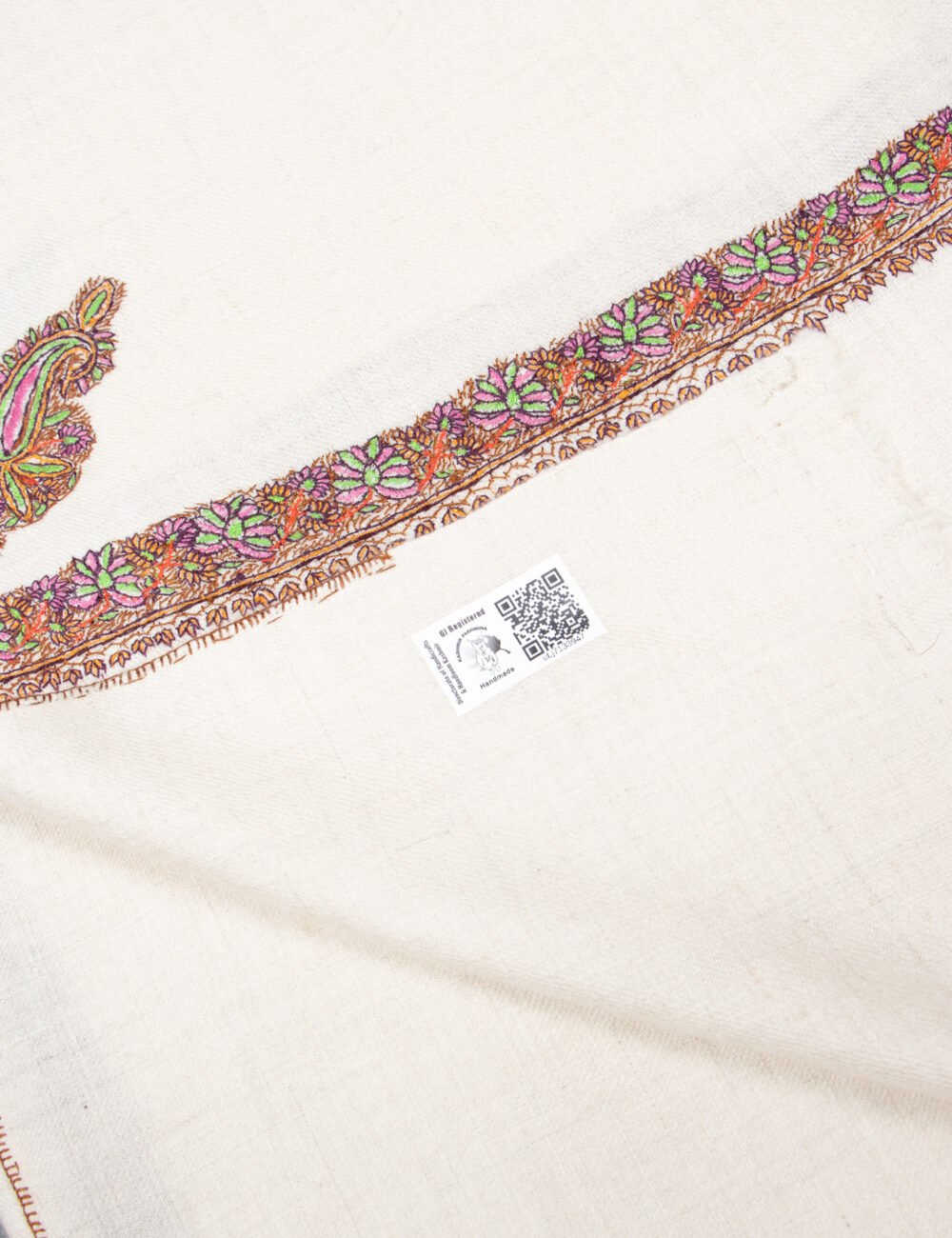
GI-Certified Pashmina products come with a special GI label that contains a unique code. One can use the code to verify the certification online through the official GI verification platform.
3: Why is GI-certified Pashmina considered premium quality?
GI-certified Pashmina is made by using approved raw materials and traditional methods. It ensures that the fabric is pure, soft, and naturally warm. This reflects true Kashmiri handwork, and that is why it stands out from mixed-fiber-made shawls.
4: Is GI-certified Pashmina always handmade?
Yes, absolutely, the GI-certified Pashmina is connected to the handmade methods practiced by Kashmiri artisans.
5: Why does GI-certified Pashmina cost more than regular Pashmina?
As GI Pashmina is made from rare and high-quality fiber and involves every single detailed manual work that takes significant time and skill. On the other hand, regular Pashmina products are machine-made and are less durable. Due to this, GI-certified Pashmina costs more than the regular Pashmina.