Pashmina is not just a luxurious fabric but a centuries-old tradition and heritage, preserved by Kashmiri artisans for generations. However, the market for machine-made Pashmina has grown rapidly in recent years. It may look like real Pashmina, but its quality and beauty are completely different. You can only recognize its authenticity if you are familiar with original Pashmina and how to verify it.
Being cheaper, machine-made Pashmina sells more, making pure Pashmina rare and threatening the livelihood of Kashmiri artisans.
In this article, we will explore the impact of machine-made Pashmina on the Kashmiri handloom industry and how we can help preserve this heritage.
Traditional Handwoven Pashmina: An Age-Old Craft

Pashmina shawl is a refined version of Cashmere wool, obtained from Pashmina or Changthangi goats found at high altitudes in Ladakh, Tibet, Nepal, China, etc. These goats survive in extremely cold weather, and their wool is light, soft, and warm, making it one of the finest fabrics for shawls in the world.
The making of a pure Pashmina shawl is entirely a handwoven process. Machines can ruin their delicacy and cannot replicate the intricate designs created by artisans. When these goats shed wool from their undercoat, professionals carefully remove the fibers. After proper collection, the wool is sent to local Kashmiri artisans for further processing, which includes cleaning, combing, spinning Cashmere wool into Pashmina thread, and weaving it into exquisite shawls, wraps, and scarves. This process requires skilled artisans who dedicate months or even years to crafting intricate designs.
The artisans weave Pashmina on a loom, preserving its softness and comfort. After weaving, the shawls undergo delicate handicraft work and embroidery. Designs such as Suzani and Zardozi add unique charm to Pashmina shawls, making them timeless pieces of art.
Every genuine Pashmina shawl embodies the skill, dedication, and craftsmanship of a Kashmiri artisan.
Growing Market of Machine-Made Pashmina
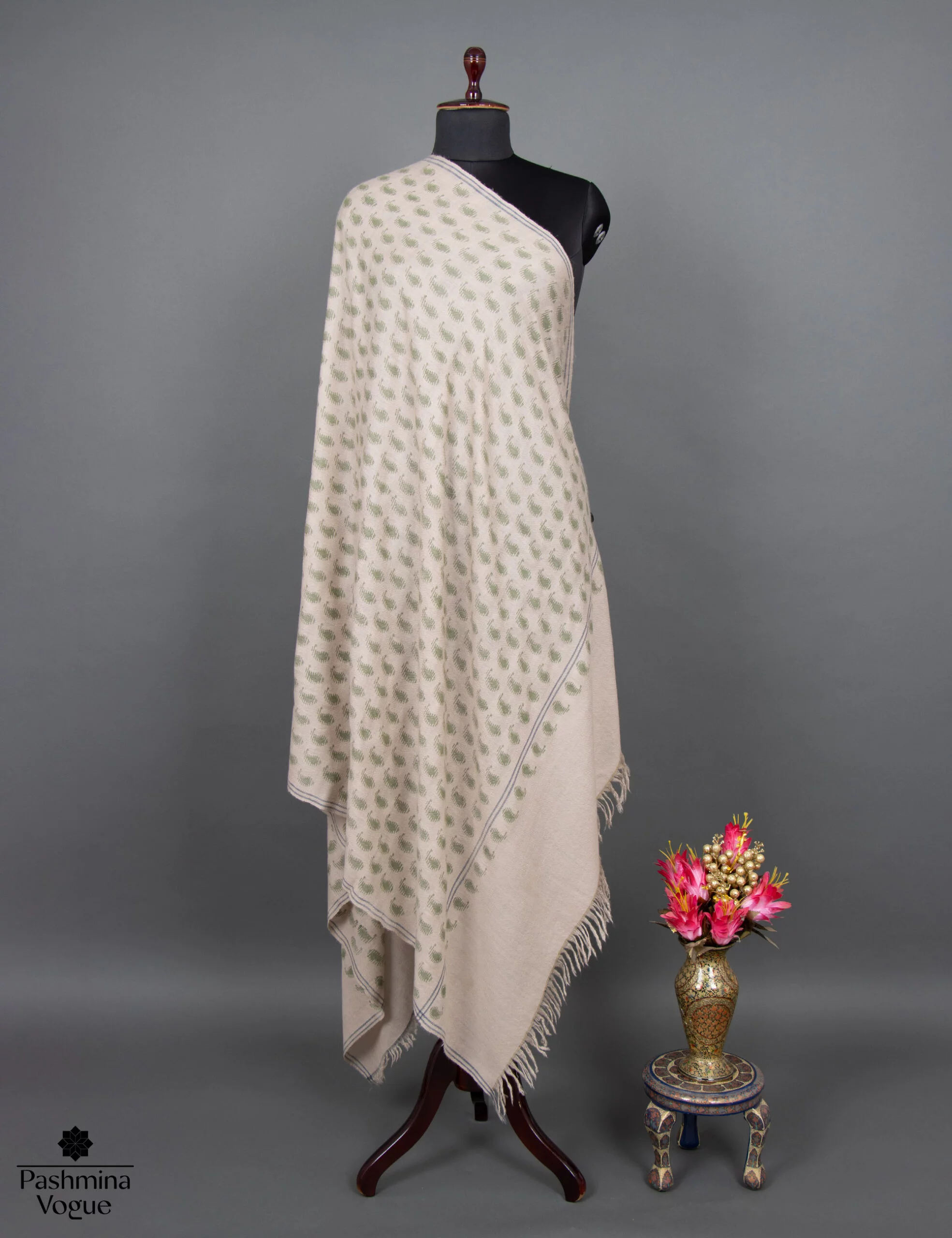
In the last few years, machine-made Pashmina shawls have suddenly entered the market. They are available at much lower prices and can be produced within days, whereas an authentic Pashmina shawl takes months or even years to complete. With advancements in technology, manufacturers now produce fabrics that resemble Pashmina.
Traders are making more profit from fake Pashmina shawls. Since they are cheaper, require lower production costs, and sell faster, they are widely distributed worldwide. However, Kashmiri artisans have suffered the most due to the rising demand for machine-made Pashmina. People often believe they are purchasing genuine Pashmina at an affordable price, but they are unaware of the truth behind it and do not recognize the real qualities of authentic Pashmina.
Machine-made Pashmina can never match the quality of real Pashmina. It lacks the long-lasting shine, delicacy, softness, and warmth of an original Pashmina shawl.
Negative Impact on the Kashmiri Handloom Industry
Kashmiri artisans are suffering significant losses due to the rise of machine-made Pashmina shawls. The demand for authentic handwoven Pashmina has declined, leading to unemployment among skilled artisans.
Previously, a single Pashmina shawl took months of meticulous craftsmanship and was sold at a high price. However, with the influx of cheap, machine-made Pashmina in the market, prices have dropped, reducing artisans’ income and forcing many to abandon their traditional craft.
Additionally, the growing demand for fake Pashmina has created confusion among consumers. Many buyers cannot distinguish between real and counterfeit Pashmina. They purchase the cheaper alternatives, believing them to be genuine, which diminishes the recognition and value of authentic craftsmanship. If this trend continues in India, the traditional handloom industry may gradually disappear, taking this centuries-old art form with it.
Economic and Ethical Consequences
The increasing sale of machine-made Pashmina shawls is not only affecting Kashmiri artisans but also the economy of the entire region. The Kashmiri Pashmina business has been a source of income for thousands of families, but now this industry is facing a decline. As a result, artisans are forced to work for lower wages, and many have been compelled to leave their profession.
On the other hand, large companies are making higher profits by underpaying workers and mass-producing fake Pashmina. While big industrialists benefit directly from this, the real artisans receive no advantage. This is not just an economic issue but also a moral one, as it exploits the hard work and traditions of Kashmiri artisans.
Steps Being Taken to Save Real Pashmina
The government and various organizations are taking several steps to protect real Pashmina. A Geographical Indication (GI) tag has been implemented to differentiate between authentic and fake Pashmina. Only Pashmina certified with a GI tag is considered genuine and is marked separately.
In addition, several awareness campaigns are being conducted to help people recognize real Pashmina and avoid counterfeit products. Various schemes are also being introduced for Kashmiri artisans to support their craftsmanship and improve their financial stability.
How Customers Can Help Save Real Pashmina

To preserve real Pashmina, customers must also be aware and make informed choices. By shopping wisely, they can support Kashmiri artisans. Whenever buying Pashmina, it is important to purchase from certified shops and always check for the Geographical Indication (GI) tag, ensuring its authenticity.
There are some simple ways to identify real Pashmina. It is lightweight and warm, and when twisted, it quickly returns to its original shape. When burned, real Pashmina smells like burnt hair, whereas fake Pashmina gives off a plastic-like odor.
Consumers should avoid purchasing cheap, adulterated Pashmina and instead buy only from ethical brands that offer pure, handmade Pashmina. This not only ensures authenticity but also appreciates the artisans’ craftsmanship and supports their livelihood.
Conclusion
Machine-made Pashmina is causing huge losses to the Kashmiri handloom industry. The livelihood of artisans is at risk, and their generations-old handloom art is slowly disappearing. If we want to preserve this precious heritage and protect real Pashmina, we must recognize and support authentic products.
Many people today focus only on price rather than quality, leading them to choose cheap, machine-made Pashmina. However, we must understand that when we buy real Pashmina, we are not just purchasing a shawl—we are preserving a tradition, honoring an artisan’s hard work, and valuing true craftsmanship. Now, more than ever, we must make informed choices and help protect Kashmir’s priceless heritage from disappearing.
One reply on “The Impact of Machine-Made Pashmina on Kashmiri Handloom Industry“