
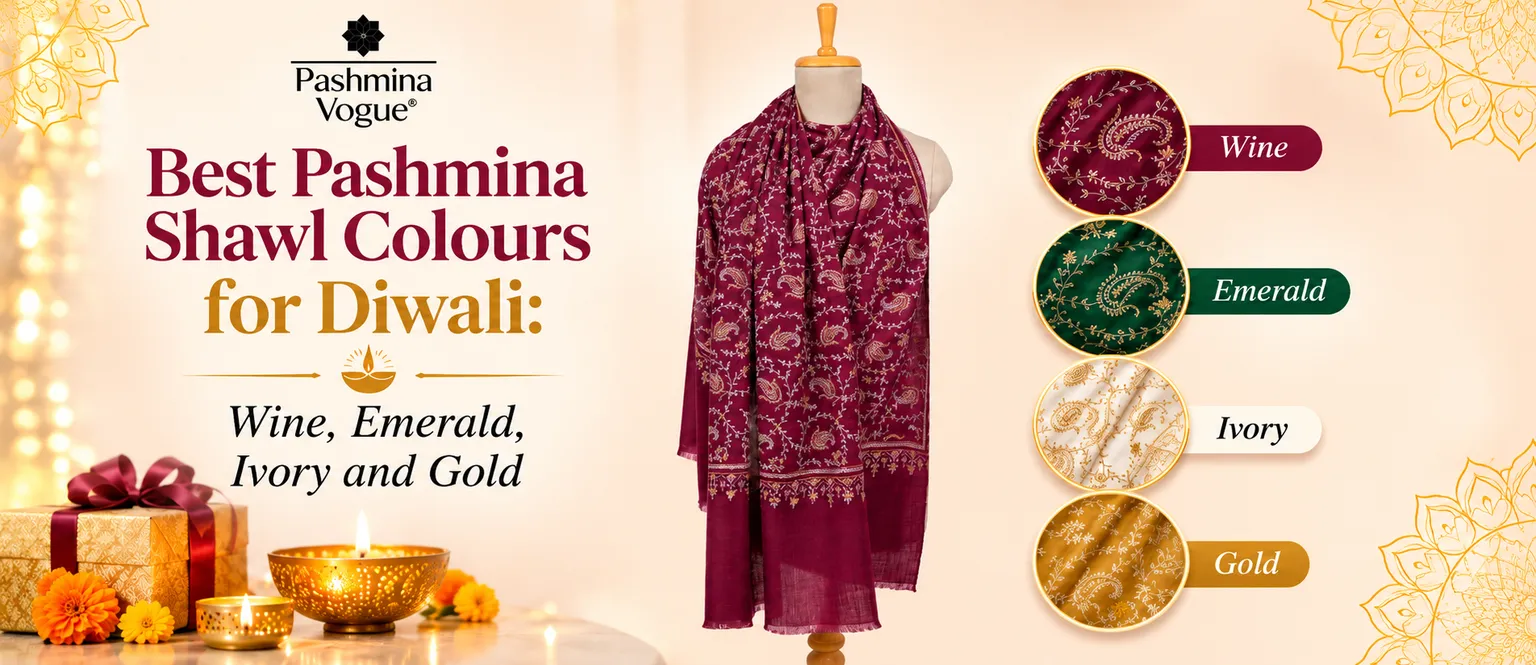
Best Pashmina Shawl Colours for Diwali: Wine, Emerald, Ivory and Gold

Diwali outfits tend to be planned around the lehenga, the sari or the kurta set, and the shawl gets picked last. That is a mistake, because a good pashmina does more than keep off the evening chill. It frames the face, softens a heavily embroidered outfit and photographs well under diya light. The colour you choose decides whether it does those things or just sits on your shoulders.
This guide looks at four shades that suit Diwali well, which are wine, emerald, ivory and gold. It covers what each one pairs with, who it flatters and where it can go wrong.
Why colour behaves differently on pashmina
The same dye can look flat on cotton and rich on pashmina. The fibre comes from the undercoat of Changthangi goats in the high-altitude Changthang region of Ladakh, and it is fine and slightly lustrous. It absorbs dye deeply and reflects light softly rather than sharply, which gives deep shades a velvety quality and pale shades a gentle glow.
This matters for festive wear. Under warm indoor lighting, a shade that looks strong on a screen can turn dull or muddy, and a shade that looks subtle in daylight can come alive. Whenever you can, judge a pashmina colour in natural light and then again under a yellow bulb, since Diwali evenings are lit mostly by the second kind.
Wine: the safe choice that never looks safe
Wine sits between burgundy and deep plum, and it is arguably the most forgiving festive shade there is. It works with warm and cool skin tones, and it handles both metallic and matte embroidery without clashing.
It is at its best against neutrals and other jewel tones. Over a black or deep navy anarkali, a wine shawl adds warmth without competing. With a cream or champagne outfit, it gives a clear contrast that looks deliberate. It is also a strong choice if you wear gold jewellery, because the two colours amplify each other.
The main thing to watch is the undertone. A wine with too much brown can look tired next to bright pink or orange, so pair it with colours of similar depth. If you are unsure, hold it next to your outfit fabric near a window before you commit.
Emerald: for people who want to be noticed
Emerald is the most striking of the four. It has the richness of a gemstone and, in the right outfit, an unmistakably royal feel. It suits olive, medium and deep skin tones particularly well and is a natural partner for gold zari work.
Emerald looks best when the outfit around it is restrained. Against a blush, ivory or soft grey ensemble, it becomes the focal point. Against a heavily patterned outfit in competing colours, it can overwhelm. A simple rule is to let either the outfit or the shawl carry the colour, and not both.
Pairing emerald with red is a classic Indian combination, but it requires some care. If both shades are very saturated, the effect is loud. A deeper, slightly muted emerald against a brick or maroon base is usually easier to wear.
Ivory: quiet, versatile and often underrated
Ivory is the shade most people overlook for Diwali because it seems too plain. In practice it is the most adaptable shawl you can own. It sits comfortably over jewel-toned silk, pastel georgette and even printed fabrics, and it lifts the whole look by adding a light layer against richer colours.
A plain ivory pashmina can look elegant on its own. One with fine tonal embroidery, such as a sozni border or a subtle paisley, brings detail without adding another colour to manage. If you plan to wear the shawl beyond the festival, ivory is the sensible pick, as it works with winter wedding outfits and everyday formal wear.
The trade-off is maintenance. Pale pashmina shows oils, perfume and make-up quickly, so it needs more careful handling around the neckline. Be wary, too, of stark white. It can look harsh against warm skin, whereas a softer ivory with a creamy base tends to flatter more people.
Gold: festive without the glare
Gold is the most difficult of the four to get right, and the difference between elegant and garish lies in the shade. Look for antique gold, champagne or a muted honey tone. Bright yellow-gold can look brassy, especially under artificial light, and it rarely sits well on pashmina’s soft texture.
A gold shawl works best over darker or simpler outfits, such as deep green, maroon, black or midnight blue. It also suits cream and beige for a tone-on-tone look. If your outfit already has substantial gold embroidery, a gold shawl may read as too much, and ivory or wine will probably serve you better.
Hand embroidery in a matching thread can bring this shade to life. Because pashmina is so lightweight, restrained detail often looks better than heavy work, which can pull on the fabric and affect how it drapes.
Matching colour to outfit and occasion
A few pairings tend to work reliably:
- Red or maroon outfits: ivory or antique gold, which add lightness rather than competing.
- Pastel outfits: wine or emerald, which add depth and definition.
- Black or navy outfits: any of the four, though wine and gold feel most festive.
- Deep green outfits: ivory or gold, with wine as a bolder alternative.
The occasion matters too. For the family puja, softer tones like ivory or muted gold feel appropriate. For an evening party or card night, wine and emerald carry more presence.
Choosing a shawl that is actually pashmina
Colour is only half the decision, because a shade can be perfect on a shawl that is not what it claims to be. Many shawls sold as pashmina are blends with wool, viscose or silk, and some are fully synthetic. Genuine hand-spun pashmina has a slightly irregular, soft texture, and the price usually reflects the labour involved. Kashmir Pashmina also holds a Geographical Indication tag, so a certified label is worth looking for.
Reputable sellers should be able to tell you the fibre content, whether the piece is handwoven or machine-made, and how it was dyed. Pashmina Vogue, like any specialist seller, should be willing to answer those questions plainly, and you should be sceptical of any retailer that cannot.
Looking after your shawl
Fold your shawl rather than hanging it, since hanging stretches the fibre over time. Store it in a breathable cotton bag with a natural moth deterrent such as cedar. Avoid spraying perfume directly on the fabric, and have it dry-cleaned by someone who knows delicate wool, or wash it by hand in cool water with a mild detergent if the label allows. Never wring it.
The colour that fits, not the colour that trends
The best Diwali shawl is the one that works with your outfit, your complexion and the way you actually celebrate. Wine gives dependable richness, emerald gives presence, ivory gives flexibility and gold gives glow when used with restraint. If you want a shawl that will outlast the festival, Pashmina Vogue and other genuine pashmina sellers offer pieces in all four shades, so take your outfit swatch with you and decide in daylight. A shawl chosen that way will stay in your wardrobe long after the diyas are put away.
Frequently asked questions
Which pashmina colour is best for Diwali?
Wine and emerald are the strongest festive choices, while ivory and antique gold give a lighter, more traditional look. The right one depends mostly on your outfit and your skin tone.
Can I wear a gold pashmina with a gold outfit?
You can, but it works best when the two golds are close in tone or the outfit has minimal embroidery. Otherwise, a contrasting colour usually looks cleaner.
Is ivory a good colour for a festival?
Yes. It is classic and photographs well, and it goes with almost any outfit. It just needs gentler handling, since pale shades mark more easily.
How can I tell if a pashmina shawl is genuine?
Ask about fibre content and origin, check for a recognised certification, and compare the feel and price against similar pieces. A very low price for a hand-woven shawl is usually a warning sign.
